Coming soon
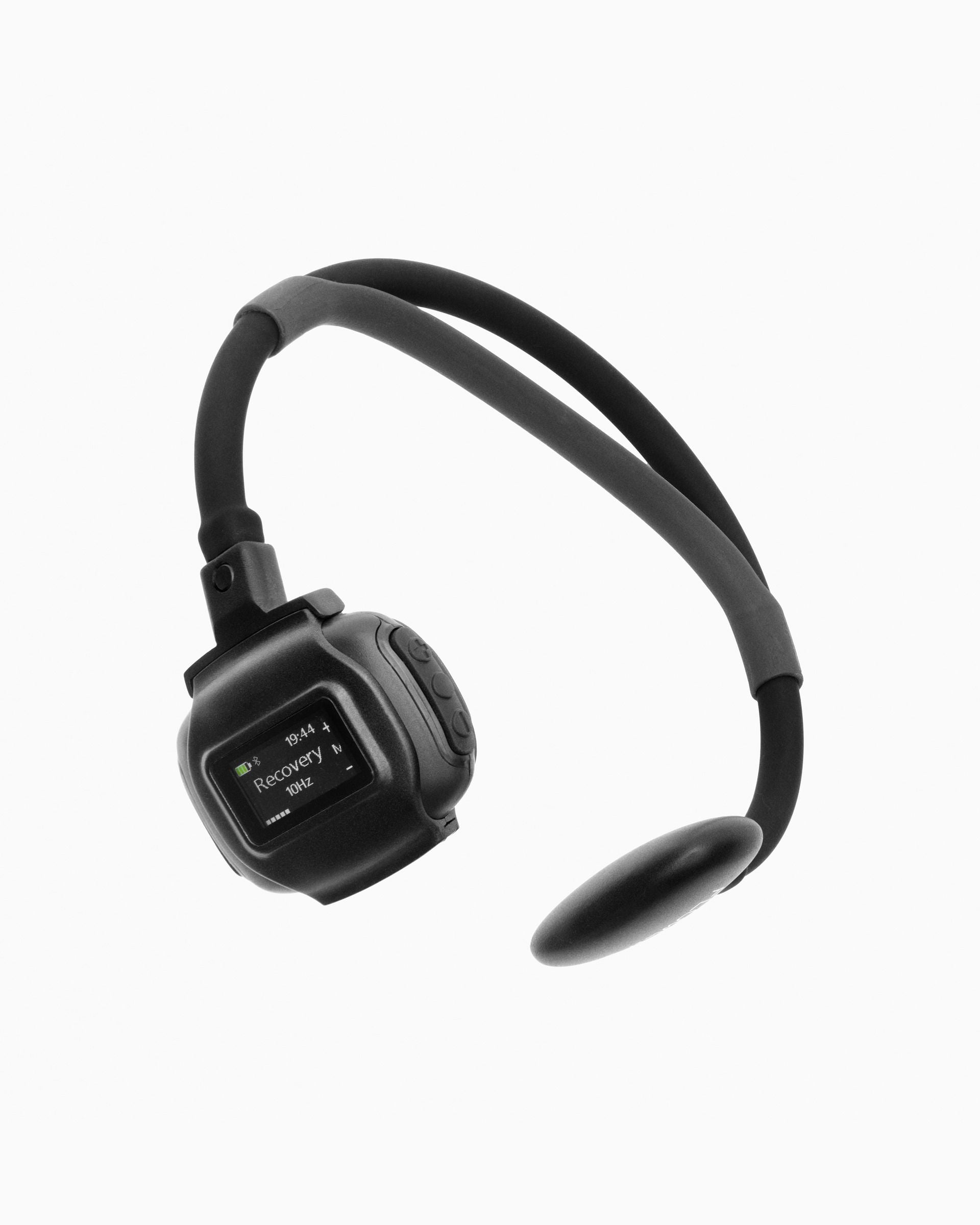
Flownerve Neck Pro
Coming soon
399 EUR
)
Science
Vagus nerve stimulation activates the body's recovery system through a nerve that runs from the brainstem down into the chest and abdomen. Roughly 80 percent of its fibres carry signals upward, from the organs to the brain, not the other way around. The body reports its own state continuously, and the brain adjusts heart rate, digestion and stress response based on what arrives. Applying a gentle electrical signal to that channel from outside the skin pushes the balance toward rest.
Flownerve Neck Pro
399 EUR
FAQ
How does vagus nerve stimulation work?
What does the vagus nerve do?
Can the vagus nerve be stimulated without surgery?
Does vagus nerve stimulation reduce stress?
Does vagus nerve stimulation help with sleep?
Does vagus nerve stimulation help recovery after training?
What is vagal tone and can it be improved?
How does vagus nerve stimulation relate to heart rate variability?
What is the difference between vagus nerve stimulation and TENS?
How often should vagus nerve stimulation be used?
Is vagus nerve stimulation safe?
Who should avoid vagus nerve stimulation?
Vagus nerve stimulation works by delivering low level electrical pulses to the vagus nerve, which increases parasympathetic activity and shifts the autonomic nervous system out of a stress dominant state.
The vagus nerve is the main pathway of the parasympathetic nervous system, the branch responsible for rest, digestion and recovery. Transcutaneous stimulation reaches the nerve through the skin, most accessibly at the cervical branch that runs along both sides of the neck. The signal activates afferent fibres that travel upward to the nucleus tractus solitarius in the brainstem, which processes incoming vagal input and distributes it through the central nervous system.
Research on transcutaneous vagus nerve stimulation consistently shows measurable changes in autonomic markers, including reduced heart rate and increased heart rate variability during and after stimulation.
In practice this means a session of four to twenty minutes produces a measurable shift toward parasympathetic dominance, with effects that build over repeated use rather than arriving fully in a single session.
)
The vagus nerve carries signals between the brain and the heart, lungs and digestive organs, and regulates heart rate, breathing, digestion and the stress response.
Known anatomically as cranial nerve X, it runs from the brainstem through the neck and into the chest and abdomen, branching widely along the way. It functions as the counterweight to the sympathetic nervous system. Where the sympathetic branch mobilises the body for action, the vagus nerve brings it back down.
Approximately 80 percent of vagal fibres are afferent, meaning they carry information from the body to the brain rather than instructions in the opposite direction. Mood, digestion, inflammation and sleep are all shaped by what travels through this channel.
Because the nerve sits close to the skin surface at the neck, it is the most accessible point in the body for influencing autonomic balance without medication or surgery.
)
Yes. Transcutaneous vagus nerve stimulation delivers electrical pulses through the skin and requires no implant, no procedure and no medication.
Implanted vagus nerve stimulators have been used in clinical medicine for decades and require surgery. Transcutaneous stimulation reaches the same nerve from outside the body, either at the cervical branch on the sides of the neck or at the auricular branch in the outer ear. Soft skin contacts and a conductive gel carry a low level signal to the nerve beneath.
Research on transcutaneous approaches has grown considerably, with studies examining effects on autonomic balance, stress markers and recovery after physical exertion.
For general wellness use the cervical approach is the more practical of the two, since the contact points sit against the sides of the neck and leave the hands free during a session.
)
Vagus nerve stimulation reduces the physiological stress response by increasing parasympathetic activity, which lowers heart rate and moves the body out of sympathetic dominance.
Stress is not only a mental state. It is a measurable autonomic pattern of elevated heart rate, shallow breathing, raised muscle tension and suppressed digestion. The vagus nerve is the primary brake on that pattern. Stimulating it applies the brake directly rather than waiting for the state to resolve on its own.
Studies on transcutaneous vagus nerve stimulation report reductions in physiological stress markers and improvements in autonomic balance, with the clearest effects in people whose baseline vagal activity is low.
Most people notice a settling during the session itself. Broader changes in how quickly the body comes down after demanding periods typically become apparent after two to four weeks of consistent use.
)
Vagus nerve stimulation supports sleep onset by activating parasympathetic pathways in the evening, which lowers heart rate and reduces the physiological arousal that delays falling asleep.
Sleep onset depends on a shift from sympathetic to parasympathetic dominance. When that shift is incomplete, the body remains in a state of readiness even when the day has ended. Low stimulation frequencies activate the deeper parasympathetic pathways most closely associated with this transition.
Research on vagal activity and sleep consistently links higher parasympathetic tone with faster sleep onset and more stable sleep architecture, although individual response varies.
In practice a low frequency session in the thirty minutes before bed, lying down in a quiet room, is the pattern that fits the mechanism most closely.
)
Vagus nerve stimulation accelerates the shift from sympathetic to parasympathetic dominance after exercise, which is the state in which physical recovery takes place.
Hard training leaves the autonomic nervous system elevated. Heart rate stays raised, and the body remains mobilised rather than repairing. Vagal stimulation shortens that window by increasing parasympathetic activity directly, so the recovery state begins sooner after the session ends.
Research on transcutaneous vagus nerve stimulation in athletic contexts has examined heart rate, heart rate variability and metabolic clearance after exertion, with results pointing toward faster autonomic recovery.
The window of clearest benefit is the twenty to thirty minutes immediately after finishing exercise, ideally combined with horizontal rest.
Vagal tone describes the level of ongoing activity in the vagus nerve, and it can be influenced through breathing, physical activity, cold exposure and direct electrical stimulation.
Higher vagal tone reflects a nervous system able to move fluidly between activation and recovery. Lower vagal tone reflects one that stays activated. Because the vagus nerve modulates heart rate continuously, vagal tone can be estimated indirectly from beat to beat variation in the heartbeat.
Research links higher vagal tone with faster recovery from stress, more stable sleep and better regulated inflammatory response, which is why it has become a common marker in work on resilience and recovery.
Vagal tone responds to repeated stimulus rather than intensity. Three to five short sessions per week move further than one long session.
Heart rate variability is largely driven by vagal activity, so vagus nerve stimulation and heart rate variability measure two sides of the same autonomic system.
Heart rate variability describes the variation in time between consecutive heartbeats. High variability indicates a nervous system responding flexibly to demand. Low variability indicates one locked in a stress dominant pattern. The vagus nerve adjusts heart rate in real time, which makes parasympathetic activity the primary driver of healthy variability.
Studies on transcutaneous vagus nerve stimulation report measurable increases in heart rate variability during and shortly after stimulation, particularly at lower frequencies.
For anyone already tracking heart rate variability with a watch or ring, that measurement provides a useful way to observe how the body responds over weeks of consistent use.
Both deliver electrical stimulation through the skin, but TENS targets sensory nerves to interrupt pain signals, while vagus nerve stimulation targets the autonomic nervous system to shift the body toward recovery.
TENS works through the pain gate mechanism. Stimulating A beta fibres at the site of discomfort reduces the transmission of pain signals from C fibres, and can also trigger endorphin release. Vagus nerve stimulation works on a different axis entirely, activating afferent vagal fibres that report to the brainstem and influence heart rate, digestion and stress response across the whole body.
The distinction is target rather than technology. One is local and symptom directed. The other is systemic and state directed.
In practice TENS is applied where discomfort is present, while vagus nerve stimulation is applied at the neck regardless of where tension is felt.
Three to five sessions per week produce more change than a single longer session, because the vagus nerve responds to repeated stimulus rather than intensity.
Each session builds on the previous one. The nervous system adapts to a consistent signal over weeks, and that adaptation is what produces a steadier baseline rather than a temporary shift. One or two sessions per day is appropriate for most healthy adults, with at least thirty minutes between them.
Research on autonomic adaptation consistently points toward regularity as the determining factor, with measurable changes typically emerging after two to four weeks.
Sessions run from four to twenty minutes. There is no additional benefit to extended continuous use beyond that range.
Transcutaneous vagus nerve stimulation is considered safe for healthy adults when used according to the manufacturer instructions, with mild and temporary side effects at the contact points.
The most common sensations are a light tingling during stimulation, gentle warmth at the contact points, small muscle twitches near the device and brief skin redness afterward. All of these are expected responses to a low level electrical signal and settle quickly.
Contact points must sit against the sides of the neck and never on the front of the throat, since the carotid sinus and larynx sit there. Conductive gel reduces the risk of skin irritation, and intensity should be raised gradually to a mild steady tingling rather than a strong sensation.
Use should stop immediately in the event of dizziness, chest discomfort, difficulty breathing or heart palpitations, followed by contact with a healthcare provider.
Vagus nerve stimulation should not be used by anyone with an active implanted electronic device, metal implants in the neck area, broken or inflamed skin at the application site, or during pregnancy.
Implanted electronic devices include pacemakers, implanted defibrillators, cochlear implants and insulin pumps. Electrical stimulation near the neck can interfere with their operation.
A healthcare provider should be consulted before use by anyone with a diagnosed heart condition or blood pressure disorder, a history of epilepsy or seizures, anyone undergoing active cancer treatment, and anyone taking medication that affects heart rate or the autonomic nervous system. The devices are not intended for anyone under 18.
Devices sold for general wellness are not medical devices and are not intended to diagnose, treat, cure or prevent any disease or medical condition.
FAQ
Explore