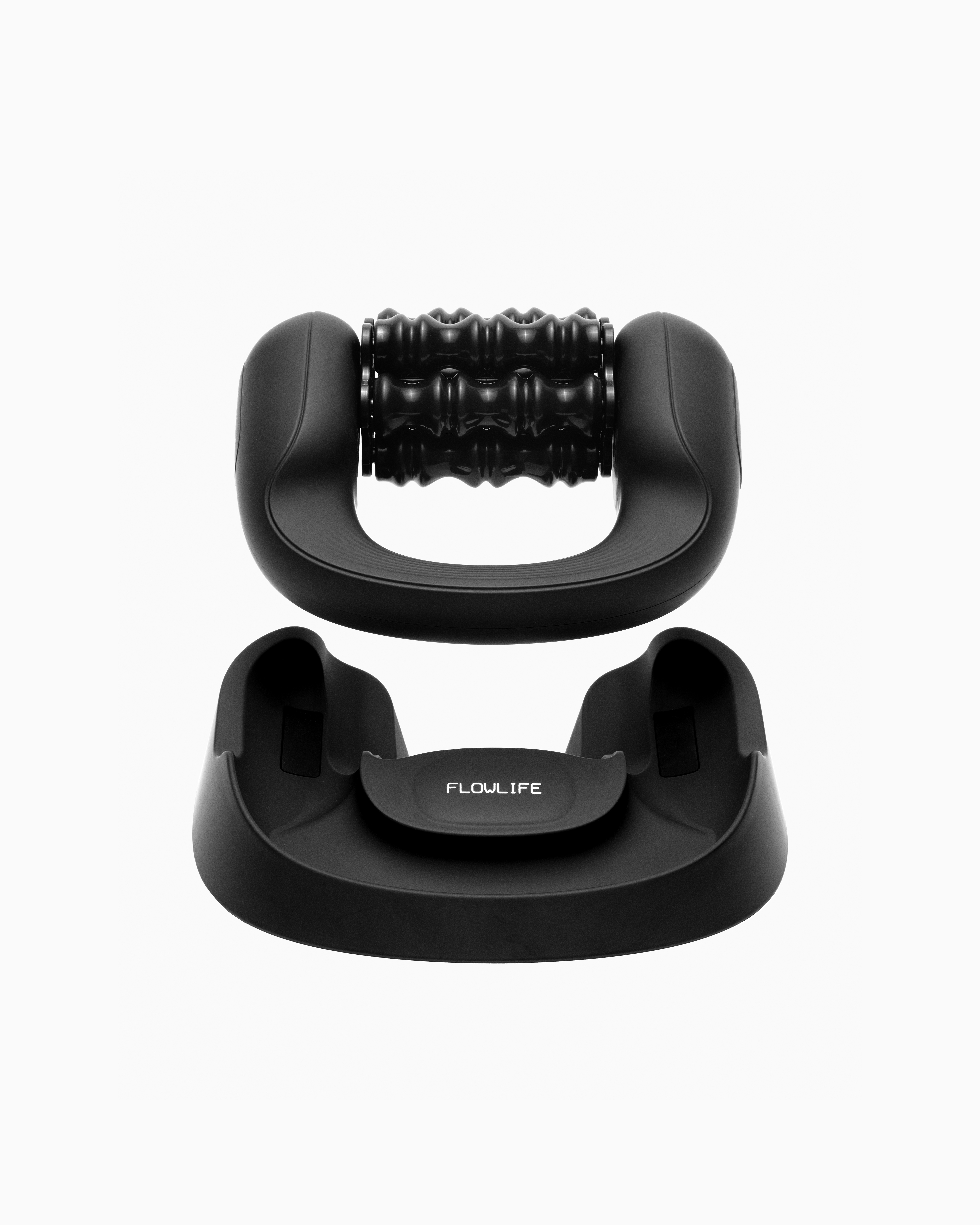
Flowlymph Roller Go
New
999 DKK
Science
Lymphatic drainage therapy uses rhythmic external pressure to move fluid that the body cannot move on its own. The lymphatic system has no central pump. It depends entirely on muscle movement, breathing, and pressure from outside the body to push roughly two to three litres of fluid back into the bloodstream every day. When movement drops, that fluid stays in the tissue, and the result is the familiar heaviness in the legs at the end of a long day.

Flowpression Calf Single
899 DKK699 DKK

Flowpression Hand
1 199 DKK999 DKK
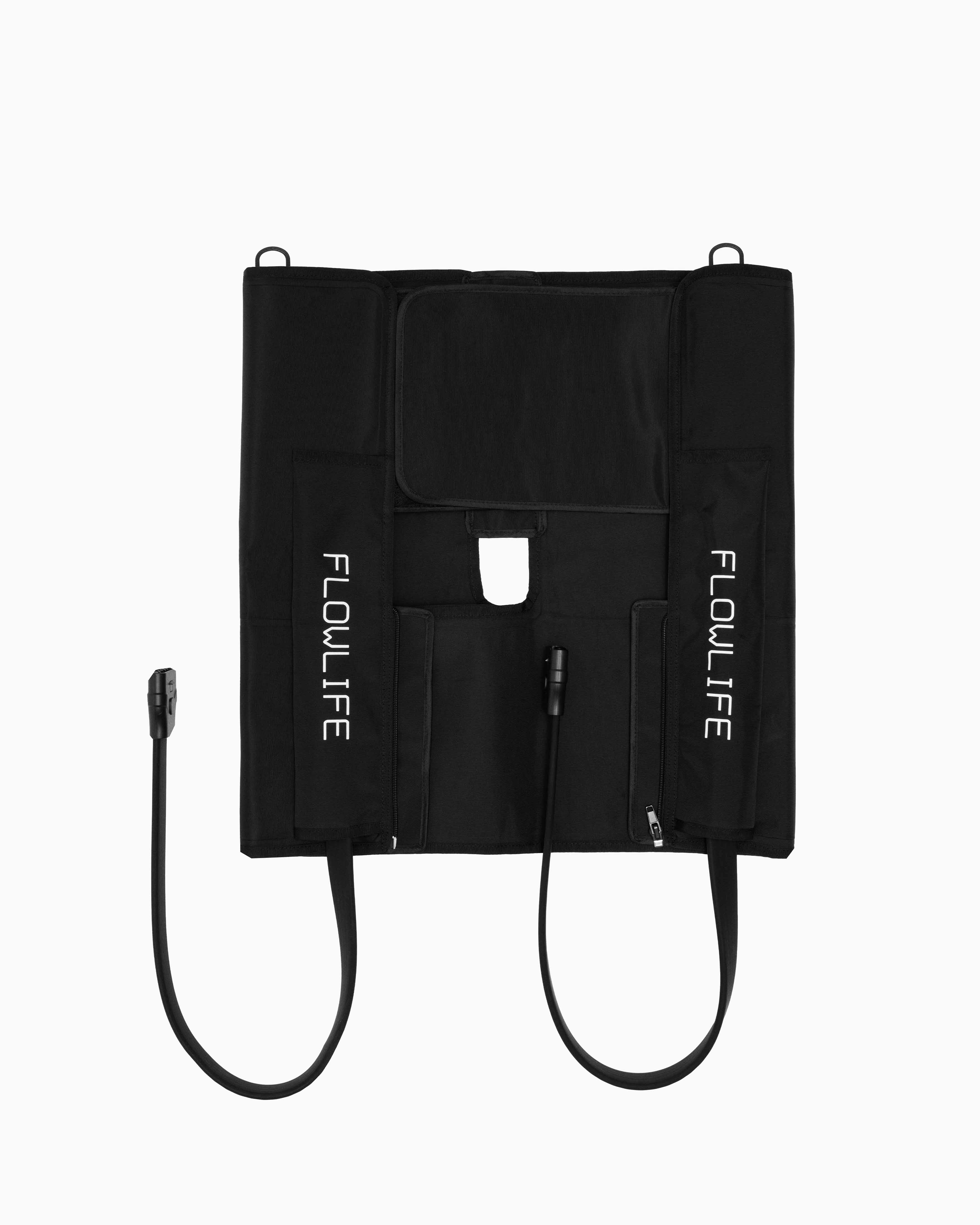
Pro+ Hip Attachment
1 599 DKK1 299 DKK
FAQ
How does lymphatic drainage therapy work?
Does lymphatic drainage reduce swelling in the legs and ankles?
Does lymphatic drainage help with heavy, tired legs?
Does lymphatic drainage speed up recovery after training?
Does lymphatic drainage help after long periods of sitting or travel?
How often should lymphatic drainage be used?
What is the difference between lymphatic drainage and compression therapy?
What is the difference between lymphatic drainage and percussion therapy?
Can lymphatic drainage help with morning stiffness and end of day heaviness?
Does lymphatic drainage actually work?
Is lymphatic drainage safe?
Who should avoid lymphatic drainage?
)
Lymphatic drainage therapy works by applying rhythmic external pressure along the lymphatic pathways, which opens the valves inside the lymph vessels and moves interstitial fluid toward the lymph nodes and back into circulation.
The lymphatic system runs parallel to the blood circulation but has no heart driving it. Fluid is moved by segments of vessel called lymphangions, each with valves that open in only one direction. At rest these segments contract roughly six to ten times per minute. External pressure applied in a repeated, directional pattern stretches the vessel wall, and that stretch triggers the segment to contract more often and in better coordination with its neighbours. Pressure applied along the limb also supports the skeletal muscle pump, which improves venous return at the same time.
The physiology of lymphatic transport is well established. Research consistently shows that lymph flow increases substantially during muscle activity and under applied external pressure compared with rest.
Direction and repetition matter more than force. Consistent pressure applied toward the nodes produces more transport than heavier pressure applied without direction.
Explore
)
Lymphatic drainage reduces everyday swelling in the legs and ankles by moving accumulated interstitial fluid out of the lower limb and toward the lymph nodes in the groin.
Fluid filters out of the capillaries into the surrounding tissue continuously. Gravity means the lower leg, ankle, and foot are where that fluid collects first when transport slows. Rhythmic pressure applied from the foot upward creates a gradient that moves the fluid against gravity toward the proximal collectors. As the volume in the tissue falls, local tissue pressure normalises and the visible puffiness around the ankle reduces.
Studies on external pressure applied to the lower limb demonstrate measurable reductions in limb volume across a session. Effects are most consistent for swelling related to inactivity, heat, and prolonged standing.
Work from the ankle upward rather than downward. Fifteen to twenty minutes on the lower leg is a typical session for end of day swelling.
Explore
)
Lymphatic drainage relieves the sensation of heavy, tired legs by reducing the volume of fluid held in the tissue and lowering the pressure that fluid places on surrounding structures.
Heaviness is a pressure sensation. When lymphatic transport slows, fluid accumulates in the space between the cells and local tissue pressure rises. Nerve endings in the tissue register that pressure, and the leg feels dense and slow before any visible swelling appears. Rhythmic rolling pressure moves that fluid along established pathways, tissue pressure falls, and the leg feels lighter within the session.
Research on external pressure techniques shows consistent improvements in self reported heaviness and limb comfort, with effects reported immediately after a session.
Heaviness responds faster than visible swelling. A short daily session is generally more effective than one long session per week.
Explore
)
Lymphatic drainage supports recovery after training by accelerating the removal of metabolic waste and excess fluid from the working muscle.
Hard training increases capillary filtration into the muscle tissue and leaves behind metabolic byproducts that the circulation clears over the following hours. The lymphatic system handles the fraction that the venous system cannot carry, including larger protein molecules. Applied rhythmic pressure increases lymphatic transport and improves microcirculation in the same tissue, which brings oxygen and nutrients in while waste is carried out.
Research on mechanical recovery techniques shows reduced perceived soreness and faster return of range of motion in the days following hard training. Evidence for lymphatic techniques specifically is less extensive than for compression, though the underlying transport mechanism is the same.
Longer sessions of fifteen to twenty minutes on the legs after activity target waste clearance. Shorter daily sessions maintain baseline flow between training days.
Explore
)
Lymphatic drainage counteracts the fluid accumulation caused by long periods of sitting, standing, or air travel by replacing the muscle movement the body would normally use to move lymph.
Lymph transport depends on the calf muscle contracting and releasing. Several hours in a seated position removes that pump almost entirely while gravity continues to pull fluid into the lower leg. Cabin pressure and reduced movement during flights compound the effect. Rhythmic external pressure substitutes for the missing muscle contraction and restores directional flow toward the nodes.
Fluid accumulation in the lower limb during prolonged sitting and air travel is well documented, and external pressure is an established countermeasure.
A session on arrival is more effective than waiting until the following morning. Two to three minutes per area is enough to restart flow.
Explore
)
Lymphatic drainage responds to frequency rather than intensity, and daily sessions of a few minutes produce better results than occasional long sessions.
Each session produces a temporary increase in lymphatic transport. That increase fades once the stimulus stops. Repeating the stimulus daily keeps transport elevated across the week rather than allowing tissue volume to rebuild between sessions. Over weeks, the baseline volume held in the tissue falls, so each day starts from a lighter state.
Research on repeated external pressure protocols shows cumulative reductions in limb volume over multi week programmes, with single sessions producing temporary effects only.
Two to three minutes per area at low intensity each morning maintains baseline flow. Fifteen to twenty minutes at higher intensity on the legs after activity addresses training load.
Explore
)
Compression therapy applies pressure to an entire limb enclosed inside a garment, while lymphatic drainage applies moving, directional pressure to a specific area of tissue.
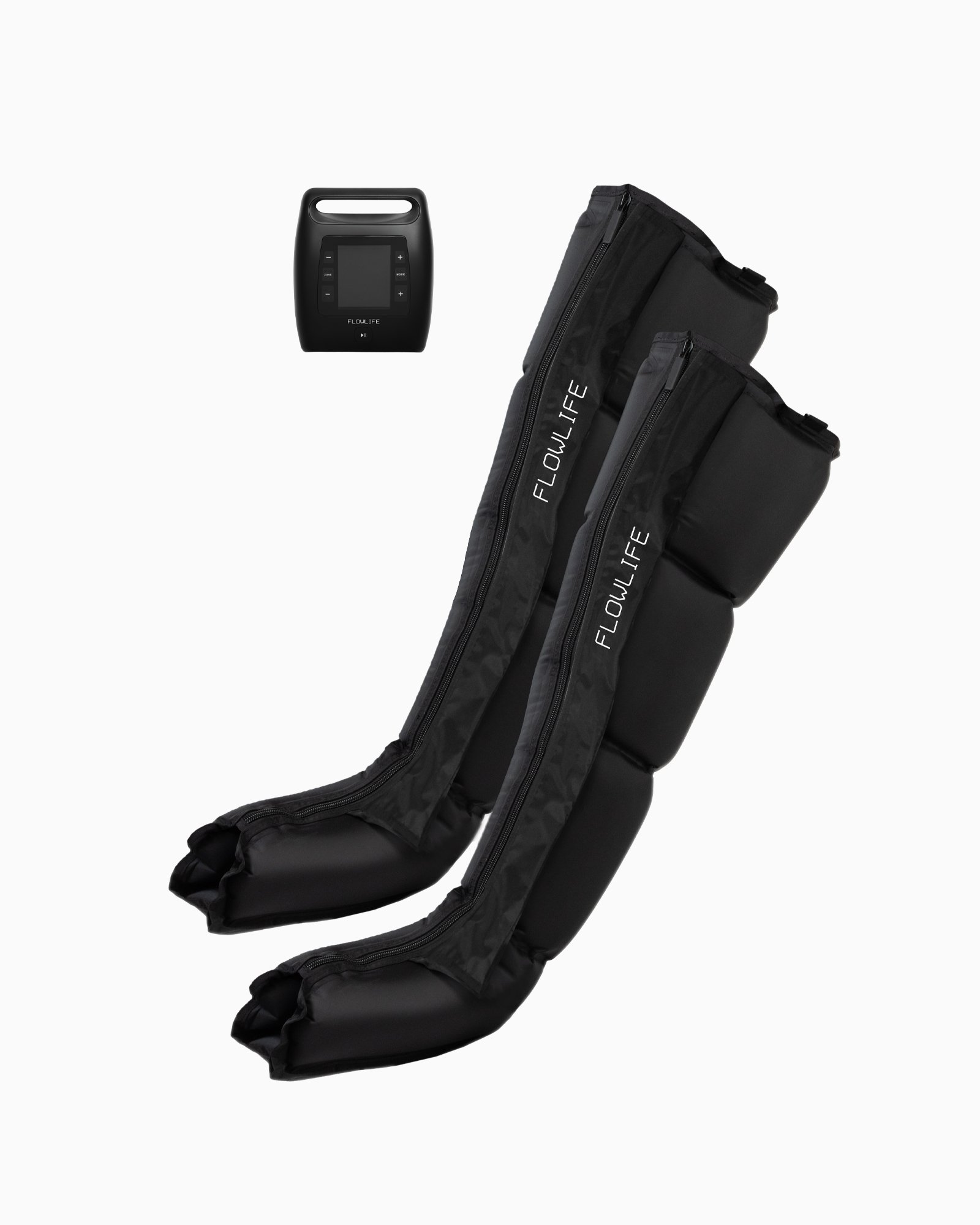
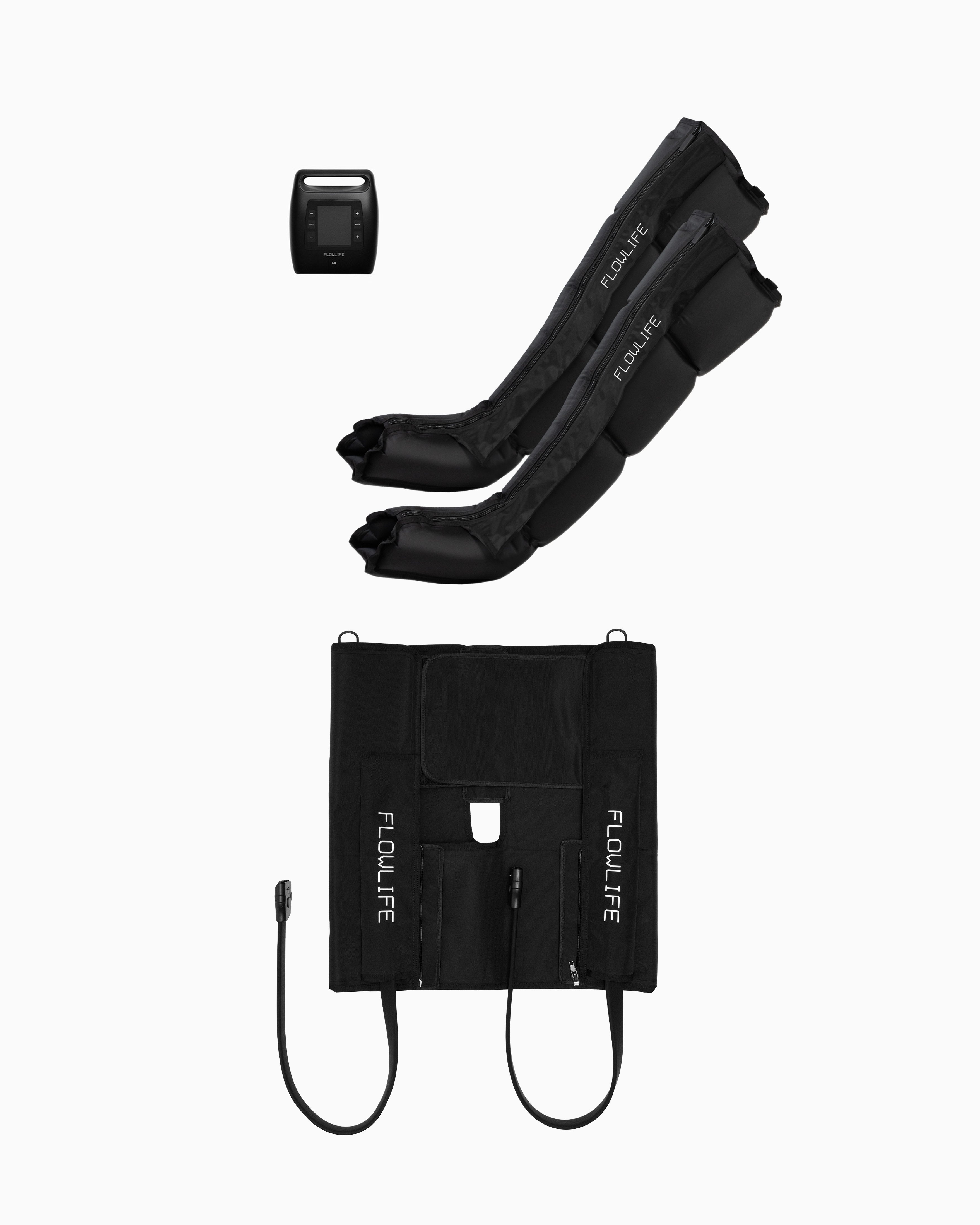
Pneumatic compression uses chambers that inflate in sequence from the foot upward, producing a wave of pressure across the whole limb at once. The limb is enclosed, the pressure is uniform across each chamber, and the session runs hands free. Lymphatic drainage applies a narrower contact surface that moves across the tissue, which allows the pressure to be directed along a specific pathway and applied to areas a boot cannot reach, including the arms, upper back, and neck.
Both increase lymphatic transport and venous return. Evidence for pneumatic compression is more extensive, reflecting its longer clinical history. The mechanisms are complementary rather than competing.
Compression suits whole limb recovery after heavy training. Lymphatic drainage suits targeted work, smaller areas, and situations where a boot is impractical.
Explore
)
Percussion therapy delivers rapid impacts into muscle tissue, while lymphatic drainage applies rolling pressure across the surface to move fluid rather than release muscle.
Percussion works at twenty to fifty strikes per second and penetrates roughly ten to sixteen millimetres into the muscle, targeting fascia and trigger points. The goal is mechanical release of tight tissue. Lymphatic drainage works at the level of the vessels sitting just under the skin, where the lymphatic collectors run. It uses slower, broader, directional contact because the target is fluid movement, and heavier pressure would compress the very vessels the technique is trying to open.
Research on percussion shows strong effects on superficial muscle tension and pre training activation. Research on lymphatic techniques shows effects on limb volume and fluid transport. They address different tissue layers and different problems.
Percussion for tight, stiff muscle. Lymphatic drainage for heaviness, puffiness, and fluid retention. The two combine well in the same session, percussion first and drainage after.
Explore
)
Lymphatic drainage addresses both morning stiffness and end of day heaviness because both are driven by fluid that has settled in the tissue rather than by muscle damage.
Fluid distributes differently depending on position. A full day upright drives fluid into the lower leg, producing heaviness by evening. A night lying flat allows fluid to redistribute into the tissue more evenly, and the joints move against that resistance on waking, which registers as stiffness. In both cases the fluid is in the interstitial space, and directional pressure moves it toward the collectors.
Limb volume is known to vary measurably across the day with posture and activity. Reductions in soft tissue congestion are consistently associated with improved joint comfort and range of motion.
A morning session addresses stiffness. An evening session addresses accumulated heaviness. Both are short, and the two together produce the most stable result.
Explore
)
Lymphatic drainage produces measurable increases in lymph flow and measurable reductions in limb volume, and the underlying transport physiology is well established.
The lymphatic system moves fluid through segmental contraction and valves that open in one direction only, assisted by external forces from movement and pressure. Applying rhythmic external pressure adds a mechanical input the system is built to respond to. This is not a contested mechanism. What varies between individuals is how much fluid was being retained to begin with, which determines how noticeable the effect feels.
The strongest documented effects are on limb volume, perceived heaviness, and comfort. Effects on athletic performance are not established, and lymphatic drainage should not be presented as a performance intervention.
The clearest results appear in people with fluid retention from inactivity, heat, prolonged standing, or heavy training load. Sessions of fifteen to twenty minutes are typical for device based use.
Explore
)
Lymphatic drainage is safe for healthy individuals. It is non invasive, uses light pressure, and involves no joint manipulation.
The technique works at low pressure on superficial tissue, so mechanical risk is low. Pressure should not be applied over fractures, surgical wounds, active skin infections, or open wounds. Areas with varicose veins and areas with reduced sensation should be avoided, since pressure cannot be judged accurately where sensation is impaired.
External pressure techniques have a strong safety record across a wide range of populations.
Start at the lowest intensity and increase only if the tissue tolerates it comfortably. Discomfort is a signal to reduce pressure, not to push through.
)
Lymphatic drainage should be avoided during active infection, over areas of inflammation, and by anyone with a known blood clot, and it is not a substitute for medical assessment of persistent swelling.
Increasing fluid transport through an area with an active infection can spread it. Applying pressure over or near a known blood clot carries a serious risk and must be avoided entirely. Swelling that appears suddenly, affects one limb only, or does not resolve with rest can indicate a circulatory, cardiac, or kidney condition that requires assessment rather than drainage.
These are standard precautions for all external pressure techniques.
Medical advice should be sought before use in pregnancy, with heart or kidney conditions, with a history of blood clots, during cancer treatment, or where swelling is persistent, sudden, or one sided.
FAQ